Wittle Defender
- 4.3
- Rating
- 1.00M
- Installs
- Free
- Price

 Analysis by App-foxy
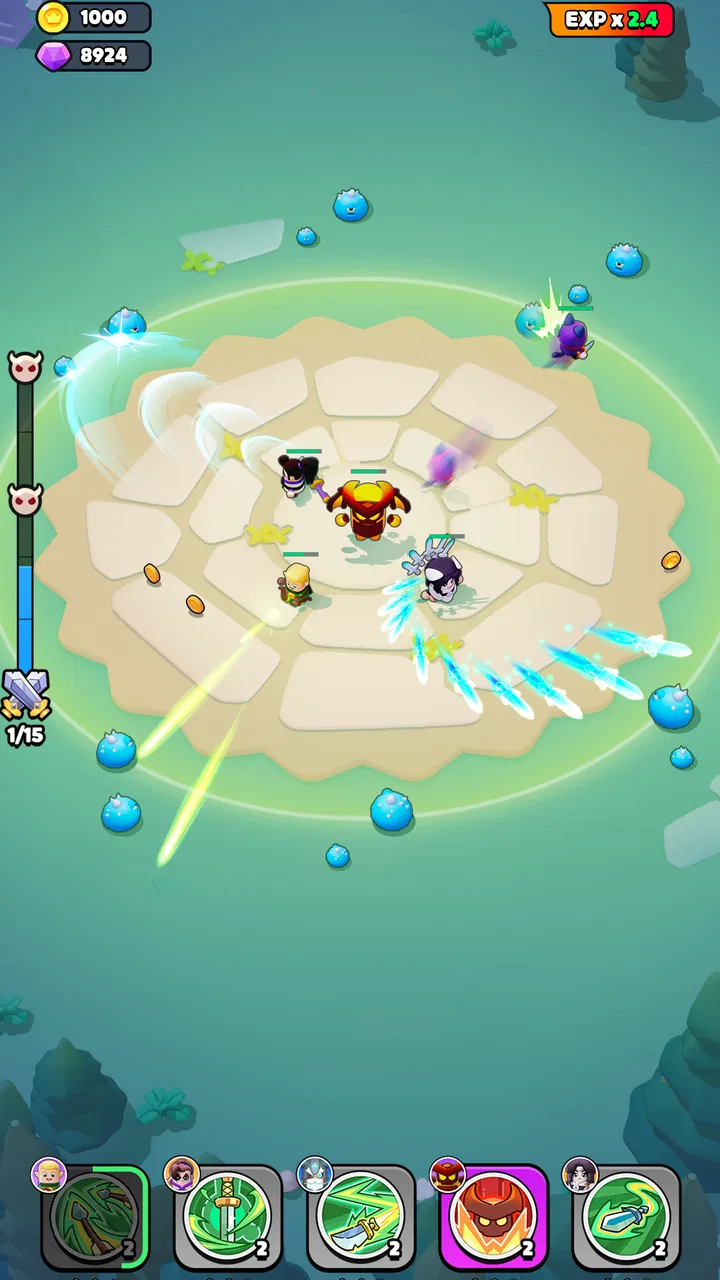
I went into Wittle Defender expecting a game I could open for a quick distraction and close without feeling as if I had abandoned a complicated task. That is exactly the standard I used while playing it: how quickly does the action become understandable, how pleasant is a short session, and does returning later feel inviting rather than demanding? Habby’s casual game makes a strong first impression because its central idea is easy to grasp. The store summary, “No dodging. Only domination,” captures the attitude, while the short description, “Wittle Defender,” keeps the presentation deliberately simple.
That simplicity is useful. I did not need a long explanation before deciding whether I was enjoying myself. The game is free to start, aimed at players aged 10 and over, and sits comfortably in the kind of mobile category people reach for while waiting for a bus, taking a break, or winding down before bed. It is not trying to be a large role-playing adventure or a deep strategy simulator. Its appeal comes from immediate action, compact decision-making, and the possibility of squeezing in a little progress without making the game the main event of the day.
How Wittle Defender feels in a short session
I judge a short session by whether I can settle into the action without turning a spare moment into a commitment. Here, I find it helps to treat each visit as one focused attempt: get oriented, make the next choice deliberately, and stop when attention starts to wander. That gives the game a cleaner rhythm and makes it easier to notice which parts of its routine are worth refining.
You May Also Like

 Blood Strike: 2.5 Anniversary
Blood Strike’s Loadouts Turn Every Drop Into a Tactical Gamble
A close look at Blood Strike’s custom loadouts: how fast access to signature weapons reshapes its battle royale rhythm, rewards preparation, and narrows the gap between fights.

 Pandora - Music & Podcasts
Pandora’s Music Is Easy to Start, but Harder to Recover
Pandora’s strength is its low-effort path from a seed to a station. Its weak spot is how much confidence it asks you to place in connection, setup, and quiet recovery.

 8 Ball Pool
 Is Built on Rivalries, Rematches, and Routine
A close look at the rivalries, rematches, shared routines, and unanswered safety questions that turn a quick pool match into a persistent mobile community.

 Samsung Music
’s Quiet Strength Is Playing What You Already Own
Its reach comes less from spectacle than from dependable access to a personal library. That simplicity is both the app’s strongest retention engine and its ceiling.

 AccuWeather: Weather Radar
AccuWeather Review: A Quick, Clear Forecast for Everyday Decisions
For everyday plans, the best forecast is the one you can understand quickly. AccuWeather makes rain timing, radar, and local conditions easy to act on, with a few trade-offs.

 Hill Climb Racing
Why Hill Climb Racing Still Turns Crashes Into One More Run
A tiny car, a bumpy hill and one more upgrade: Hill Climb Racing keeps resurfacing because its simple chaos makes every near-miss feel personal.
More From Our News Desk



The first few minutes are the real test
The best casual games explain their appeal through interaction rather than instructions, and this one benefits from that approach. I could judge the basic pleasure quickly: deal with the threat in front of me, make a choice, watch the situation change, and decide whether to continue. That rhythm gives the game a low entry barrier. If you have only a few minutes, you are not spending the whole window learning menus, reading a story, or arranging a complicated loadout.
That does not mean the experience is empty. The attraction is in the small decisions that appear between bursts of action. A choice that seems harmless early on can affect how comfortable the next stretch feels, so rushing through every option is not always the smartest way to play. My advice is to pause mentally at each upgrade or selection point instead of tapping the first attractive option. In a short-session game, one thoughtful choice can matter more than trying to play faster.
The immediate pleasure also comes from the contrast between a compact objective and visible pressure. I never needed to invent a reason to continue; the next challenge supplied it. This makes the game suitable for players who enjoy a light defensive setup without wanting the preparation phase to become a spreadsheet. At the same time, anyone looking for a slow, highly detailed strategy experience may find the presentation too streamlined.
Why the no-dodging attitude matters
The phrase used in the store summary is more than a catchy line because it points toward the game’s personality. The focus is on standing your ground and making the right defensive decisions, not on turning every moment into an exercise in reflexive movement. I found that refreshing when I wanted something direct. There is less pressure to perform a perfect sequence of evasive actions, and more room to think about what will help me survive the next exchange.
This design also makes the game easier to play in ordinary surroundings. A noisy room or a brief interruption can make a precision-based action game frustrating, while a more deliberate defensive loop gives me a better chance to recover my attention. It is not completely free from pressure, of course. Losing track of what is happening can still lead to poor choices, especially when several decisions arrive close together. The important distinction is that the challenge feels more like managing a situation than executing a flawless physical routine.
For a casual title, that is a meaningful strength. I can recommend it to someone who likes the idea of defense-themed gameplay but does not want to memorize elaborate controls. I would be more cautious recommending it to a player whose favorite part of mobile action games is constant movement, precision timing, or a large range of playable systems.
A practical routine for busy days
My most enjoyable way to use it was to treat each visit as a small appointment rather than promising myself a long play session. I would open the game during a short break, focus on the immediate situation, and stop when my attention began to drift. That approach suits the game better than forcing a lengthy session. The action is easier to appreciate when I am alert enough to notice the difference between a safe choice and a greedy one.
A realistic example is a lunch break with only a few spare minutes. I can start a run, make progress, and leave without needing to coordinate with other players or remember a complicated story thread. Later, I can return with a clear idea of what I was doing. That makes it more practical than many larger mobile games, which often ask for a longer uninterrupted block before they become enjoyable.
There is a trade-off here. Short-session clarity is not the same as limitless variety. Once the basic pattern becomes familiar, the question changes from “Can I understand this?” to “Do I still enjoy making these choices?” Players should pay attention to that transition. The game is at its best when the defensive decisions remain interesting, not merely when the screen is busy.
What I do when I need to stop suddenly
Interruption tolerance is one of the most important qualities in a casual mobile game, and I found this title more comfortable when I approached it in small pieces. I could put the phone down when real life demanded attention instead of treating every session as a commitment. That is particularly valuable for people who play while commuting, waiting for an appointment, or taking short rest periods between tasks.
Still, I would not confuse an easy-to-return-to game with one that removes every consequence of distraction. If I come back while tired or immediately after being interrupted, I prefer to spend a moment checking the current situation before making a selection. The useful habit is simple: do not tap automatically after reopening. Reorient yourself, look at the available decision, and then act. That small pause prevents careless choices and makes the game feel less frantic.
This is also where the game compares favorably with more demanding alternatives in the casual category. A puzzle game may let you stop at any point, but it can require a completely different mental reset when you return. A reflex-heavy arcade game may be easy to understand yet unforgiving after a break. Wittle Defender occupies a middle ground: it is approachable, but it still gives your decisions enough weight to make returning worthwhile.
Free access and the question of spending
The game can be played for free, which removes the biggest barrier to trying it. Its optional purchases range from twenty-nine cents to ninety-nine dollars and ninety-nine cents per item. That is a wide span, so I would approach the purchase screen with the same care I use for in-game decisions. A low-cost option may feel harmless, but repeated small purchases can change the real cost of a supposedly casual pastime.
My recommendation is to play long enough to understand the normal rhythm before spending anything. Ask yourself whether you are paying to improve a genuinely enjoyable loop or simply trying to hurry past a frustrating section. If the game is already satisfying in short visits, there is no urgent reason to buy something immediately. If progress starts feeling more comfortable only after spending, that is a sign to step back and decide whether the overall experience suits your budget.
This matters especially for younger players because the age rating is Everyone 10+. The game may be accessible to that audience, but purchases still deserve adult awareness. I would treat the free version as the proper trial and make any spending decision separately, rather than assuming that an inexpensive first purchase will remain the only one.
Where the replay value comes from
Replay value in a game like this does not depend on a huge world or an elaborate narrative. It comes from whether I want to test another decision, improve a previous attempt, or see how a different approach handles pressure. The defensive format gives each return a clear purpose: I am not merely repeating an identical tap sequence; I am trying to manage the situation more effectively.
That said, the replay loop has a natural limit. If you need a constant stream of new characters, locations, story revelations, or radically different modes, a compact casual defender may not hold your attention for the long term. I enjoyed replaying it when I was in the mood for focused, uncomplicated action. I did not expect it to replace a larger game with a much broader progression system.
One useful way to extend the value is to set a small personal goal for each session. Instead of playing until boredom arrives, I might aim to make a better opening choice, survive a difficult stretch with fewer mistakes, or stop after a satisfying result. This turns repetition into practice rather than background tapping. It also protects the game’s strongest quality: the feeling that a short visit can still feel complete.
Small habits that improve the experience
The first habit I recommend is reading every choice before touching the screen. Casual games encourage quick taps, but the most useful decision is not always the one with the flashiest immediate benefit. Taking a few seconds to compare the likely short-term comfort with the longer-term risk can make a run feel more deliberate.
The second is to avoid playing while doing something that demands regular attention. The game is interruption-friendly, but that does not mean it is ideal as a completely passive activity. If I am constantly switching between it and another task, I lose the part that makes the game engaging: noticing how one decision changes the next situation. A short, focused visit is better than a long, distracted one.
The third is to separate experimentation from progress. When I have time, I can deliberately try a less obvious option and learn from the result. When I am tired or only have a moment, I choose the safer line. This simple distinction keeps the game from feeling repetitive because I am not always asking it to serve the same purpose.
Finally, I would resist judging the game after one rushed attempt. Its strongest qualities appear when the player gives the defensive rhythm enough attention to make choices rather than merely react. If that kind of engagement sounds appealing, the free entry point makes testing it straightforward. If you want instant spectacle with almost no decision-making, the game may feel slower than expected despite its accessible presentation.
Who should play it, and who should skip it?
I think Wittle Defender is a good fit for players who want a casual game with a clear defensive identity, short visits, and decisions that can be understood without studying a manual. It works particularly well for people who like to play in fragments throughout the day. The combination of direct action and manageable choices gives it a useful place between a completely passive time-killer and a demanding strategy game.
I would also suggest it to someone who has become tired of mobile games that require constant dodging or rapid finger movement. The emphasis on domination and defense gives the experience a different flavor. You still need to pay attention, but the appeal is less about showing off reflexes and more about handling pressure with reasonable choices.
I would skip it if your priority is a deep story, a highly competitive multiplayer environment, or a game that feels dramatically different every time you open it. Players who dislike repeated defensive loops may also run out of patience. In those cases, a larger strategy game or a more varied action title would probably offer better long-term satisfaction.
How it compares with familiar casual alternatives
Compared with a match-three game, this offers more continuity from one decision to the next and less of the clean, self-contained feeling of solving a single board. Compared with an endless runner, it is less dependent on continuous reflexes and more comfortable when your attention is divided by real life. Compared with a traditional tower-defense game, it feels more approachable because it does not ask me to manage a large battlefield before I can enjoy the core loop.
The comparison is not entirely one-sided. Match-three games often provide a clearer sense of a finished micro-task, while endless runners can deliver immediate excitement with almost no planning. Traditional tower defense can offer greater strategic depth for players willing to invest time. Wittle Defender’s advantage is balance: it gives me enough control to feel involved without turning a quick break into a serious study session.
That balance is also its main risk. A player may find it neither as relaxing as a simple puzzle nor as rich as a full strategy game. I think it succeeds when used for what it is: a compact defensive experience that values accessibility and repeatable sessions over complexity.
Device expectations and everyday practicality
The game supports Android devices running version 7.0 or later, which makes it available to a broad range of phones and tablets still in ordinary use. I would still keep expectations sensible on older hardware. Even when a game is easy to understand, performance and comfort depend on the device, screen size, battery condition, and how well the controls fit your hands.
Because the game is designed around short visits, it makes sense to keep the interface within comfortable reach and avoid playing in situations where a sudden interruption could cause a careless decision. I preferred using it when I could give the screen a little attention rather than treating it as something to operate blindly in the background.
The current version is 2.0.3, and the developer is Habby. Those details are useful when checking compatibility and making sure you are evaluating the same release discussed here. The game has passed the early discovery stage too: it has more than one million installs, a 4.3 average from about forty thousand ratings, and eight hundred eighty-two written reviews. Those figures suggest a substantial audience, but they do not replace personal testing. The important question is whether its particular rhythm matches the way you like to play.
My casual verdict
After spending time with it, I see Wittle Defender as a focused answer to a very specific mobile need: give me something I can understand quickly, enjoy in a small window, and revisit without rebuilding my entire concentration. It does not need a grand premise to work. Its pleasure comes from the tension between a simple defensive goal and the small choices that determine how comfortable the next moment will be.
The game is not ideal for everyone. Its repeated structure may feel narrow to players who need constant novelty, and its optional purchase range means I would keep a close eye on spending rather than tapping through offers automatically. It also rewards attention more than the phrase “casual” might suggest. You can play it lightly, but the experience improves when you make decisions intentionally.
For me, that is enough to recommend giving it a fair try. I would install it for short breaks, use the free entry point to learn whether the loop holds my interest, and avoid turning every session into a race for progress. The strongest reason to try it is its clarity under ordinary conditions: a few spare minutes, a sudden interruption, or the desire for action without a complicated commitment.
If that sounds like your kind of game, Habby’s compact defender is worth a look. If you want a sprawling strategy system or nonstop arcade intensity, choose something built around those strengths instead. Wittle Defender succeeds by staying small, direct, and easy to return to—and its replay value depends on whether making one better defensive choice still feels satisfying after the novelty fades.
FAQs for Wittle Defender
01What is Wittle Defender and how does the game work?
Wittle Defender is a casual tower-defense game in which you protect your base from successive enemy attacks. Before each wave, you typically place or upgrade defensive units, then watch them battle automatically while you manage resources and choose strategic improvements. Its approachable presentation makes it suitable for quick sessions, although later stages may require more thoughtful positioning and upgrade choices.
02Is Wittle Defender free to download and play?
Wittle Defender can generally be downloaded without an upfront purchase, but the exact monetization may include optional in-app purchases, advertisements, or both, depending on the version and platform. These extras may offer convenience, additional resources, or faster progression rather than being strictly necessary. Check the store listing before installing, especially if you want to avoid unexpected charges or frequent advertising.
03Does Wittle Defender require an internet connection?
The basic gameplay experience may be available offline, which is useful for playing during travel or when a reliable connection is unavailable. However, certain features—such as advertisements, cloud synchronization, online rewards, account services, or promotional events—may require internet access. Availability can also vary between updates and devices, so it is best to launch the game once online before relying on offline play.
04Is Wittle Defender suitable for children and new players?
Wittle Defender is designed around simple controls and colorful, accessible gameplay, so beginners can usually understand the basic mechanics quickly. Nevertheless, parents should review the age rating, advertising behavior, in-app purchase settings, and any data or account permissions shown on the store page. The strategic difficulty may increase over time, but the game does not require advanced gaming experience to get started.
05What devices are compatible with Wittle Defender, and how much storage does it need?
Compatibility depends on the version available for Android or iOS, including the operating-system requirements and device architecture supported by the developer. The initial download may be relatively small, but updates and temporary files can increase storage usage. Before downloading, compare your phone or tablet’s operating-system version with the official store listing and ensure that enough free space is available for installation and future updates.
Pros
- Simple controls make it easy for newcomers to start playing.
- Short rounds fit well into quick gaming sessions.
- Bright visuals and clear enemy designs improve readability.
- Defensive gameplay offers a satisfying sense of progression.
- Playable without requiring advanced gaming hardware.
Cons
- Repeated enemy patterns may reduce the challenge over time.
- Some upgrades can feel slow to unlock during longer sessions.
- Limited variety may make the gameplay feel repetitive.
- Small-screen controls can occasionally feel less precise.
- Progress may depend heavily on grinding or repeated attempts.

Wittle Defender
Gallery